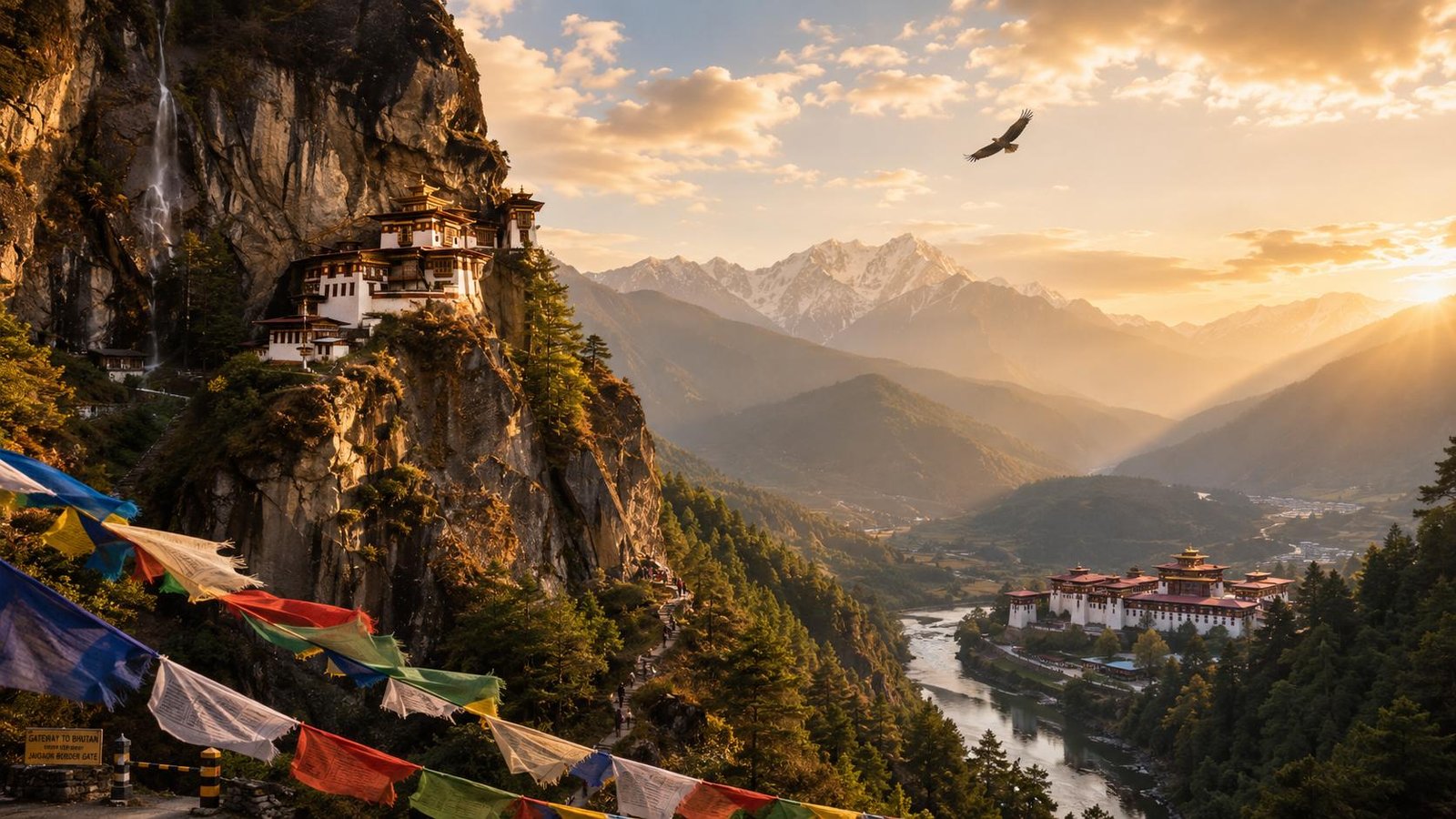
This Bhutan travel guide is written by someone who has stood at the Phuentsholing border gate hundreds of times — and watched Indian tourists arrive with the wrong documents, the wrong expectations, and sometimes the wrong season. We are based in Jaigaon, literally metres from the Bhutan border, and we have been running tours since 2018. Everything you read here is real. No fluff.
Bhutan is the only country in the world that measures progress by Gross National Happiness instead of GDP. It has no billboards. Its forests cover 72% of the land by law. The air smells like pine and incense. And for Indian tourists, getting in is easier than getting into most Indian hill stations — because there is no visa requirement at all.
Why Visit Bhutan? What This Bhutan Travel Guide Covers
This Bhutan travel guide covers everything an Indian tourist needs from start to finish: entry documents, permit process, costs, best time, top places, a 7-day itinerary, food, and practical tips from our local team. We have structured it so you can read it in order or jump to the section you need.
Bhutan is special because it is one of the last places on earth where development happened slowly and deliberately. No foreign fast food chains. No neon signs. No crowds of 50,000 tourists pushing each other at sunrise viewpoints. Even Tiger's Nest — the most photographed site in the country — still feels peaceful on a Tuesday morning in October.
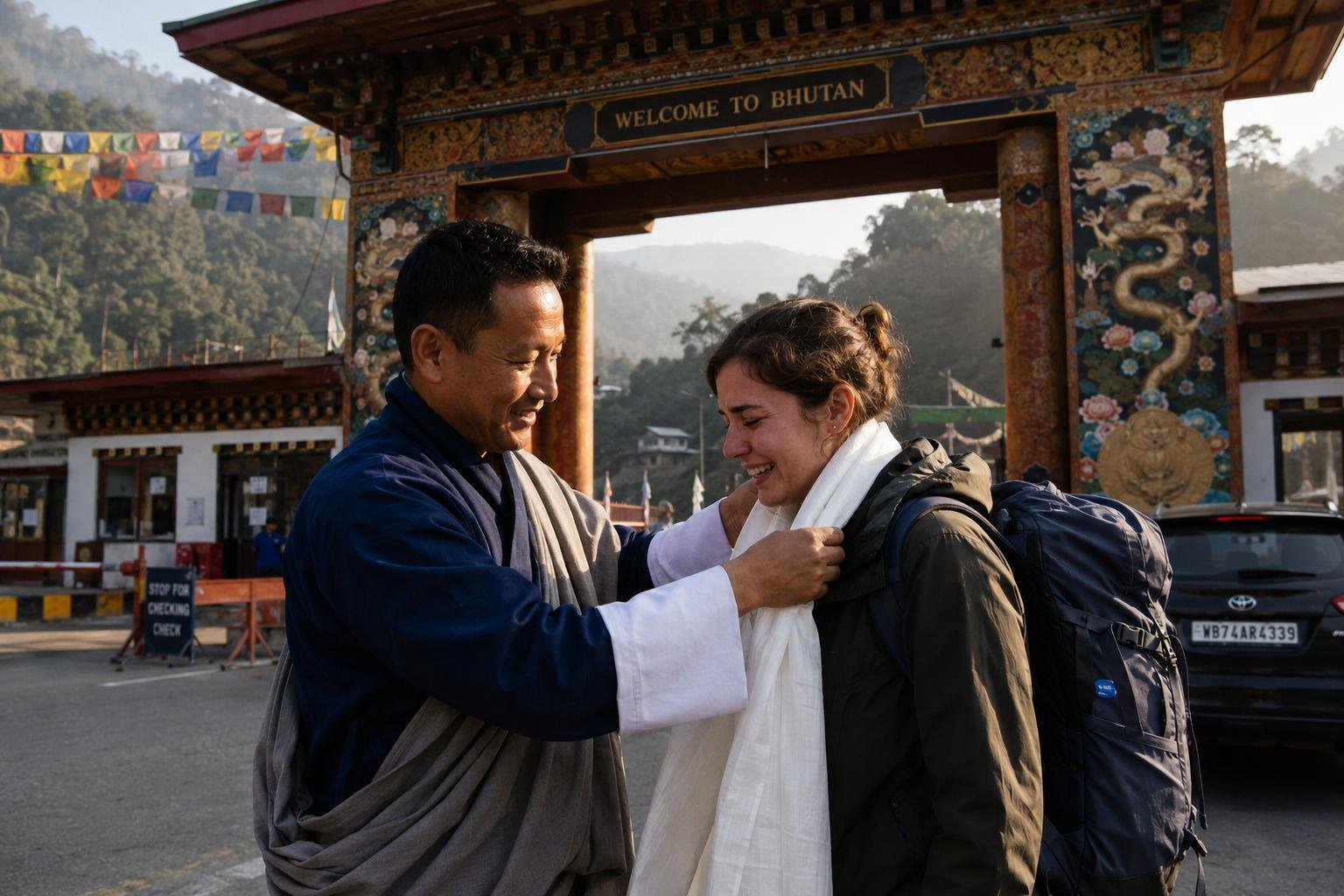
The Phuentsholing Gate — we are just 200 metres from here in Jaigaon
Bhutan Travel Guide: Entry Requirements for Indians
Indian nationals do not need a visa for Bhutan. This is a bilateral agreement between India and Bhutan. What you do need:
- Passport (valid for at least 6 months) OR a valid Indian Voter ID card — both accepted at land border entry via Phuentsholing
- Entry Permit — obtained free of charge at the Bhutan Immigration Office in Phuentsholing on the day of entry
- Inner Line Permits — required for travel beyond Thimphu to Paro, Punakha, Haa, etc. Your tour operator arranges these
- Restricted Area Permits — only needed for certain remote districts like Lhuentse or Gasa (rarely visited by tourists)
The permit process at Phuentsholing Immigration typically takes 30–90 minutes. Always arrive early — the office gets busy by 10am. Our team accompanies clients through the permit process to make sure everything moves smoothly.
Important: As per the Tourism Council of Bhutan, Indian tourists must register at the main entry points. Your hotel must also be pre-booked and submitted during the permit application. Book through a registered Bhutan tour operator — WanderWaysHolidays is registered and handles all permit documentation for you.
Bhutan Travel Guide: Best Time to Visit
March to May — Spring
The best season for most visitors. Rhododendrons bloom in reds and pinks across the mountain slopes. Temperatures are comfortable (10–20°C in Thimphu, warmer in Phuentsholing). The Paro Tsechu festival, one of Bhutan's most spectacular masked-dance festivals, falls in this period. Visibility to the Himalayan peaks is excellent.
September to November — Autumn
The second-best season. Post-monsoon air is crystal clear. Kanjur festivals, Thimphu Tsechu, and Jambay Lhakhang Drup festival all fall in September–November. This is the season for the clearest views of Mount Jomolhari and the Bhutan Himalayan range from Paro valley. Tiger's Nest hike conditions are ideal.
June to August — Monsoon (Avoid for First Trips)
Bhutan receives heavy monsoon rainfall. Roads become risky in some areas. However, the country turns extremely green and lush — some experienced travellers actually love this season. If you come in monsoon, stick to Thimphu and Paro (lower risk of road closure).
December to February — Winter
Cold (below freezing in some areas at night) but very quiet. No festival crowds. Excellent visibility. Some high mountain passes close with snow. Phuentsholing and lower Bhutan remain comfortable. Good for budget travellers — hotel rates drop.
Bhutan Travel Guide: How Much Does It Cost?
Bhutan removed the Sustainable Development Fee (SDF) of USD 200/day for Indian tourists in 2022. Indians now enter under the same permit system as before — no SDF. The main costs are transport, accommodation, guide fees, and meals.
| Package Type | Duration | Cost Per Person | What's Included |
|---|---|---|---|
| Budget | 3 Days / 2 Nights | Rs 8,000 – Rs 12,000 | Guest house, shared vehicle, guide |
| Standard | 5 Days / 4 Nights | Rs 12,000 – Rs 18,000 | 3-star hotel, private vehicle, guide, meals |
| Comfortable | 7 Days / 6 Nights | Rs 18,000 – Rs 25,000 | 4-star hotel, private vehicle, all meals, all permits |
| Boutique | 7 Days / 6 Nights | Rs 30,000 – Rs 50,000 | Boutique lodge, private guide, cultural experiences |
Flight from India to Bhutan (via Druk Air or Bhutan Airlines) adds Rs 15,000–30,000 per person return. The advantage of going from Jaigaon is that the border is our backyard — no flights needed, and we can customise any budget.
Bhutan Travel Guide: Top 5 Places to Visit
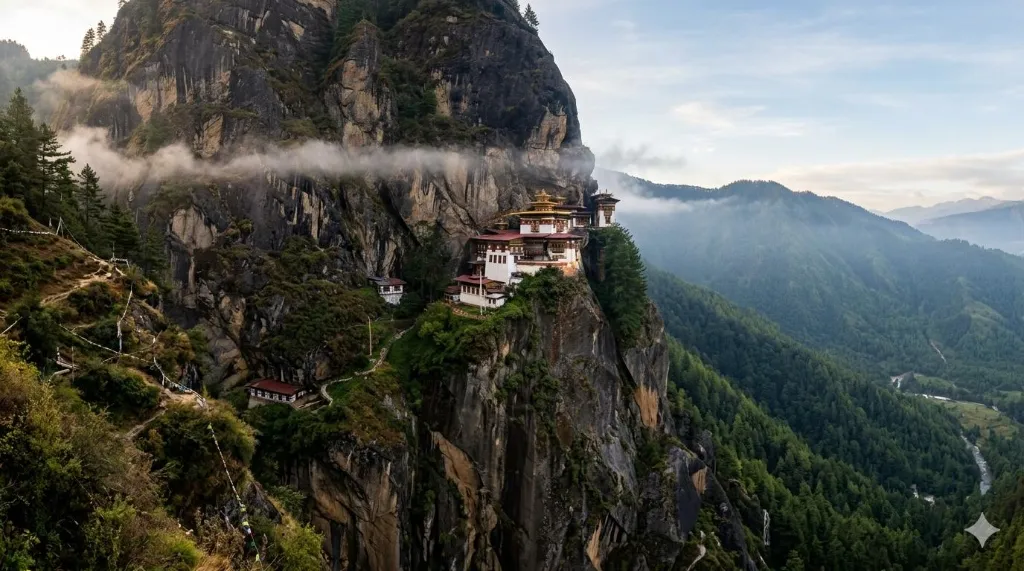
Tiger's Nest (Paro Taktsang) — the most iconic site in any Bhutan travel guide
1. Tiger's Nest (Paro Taktsang)
Paro Taktsang, built into a cliff face at 3,120 metres, is Bhutan's most sacred and most photographed site. The hike takes 2.5–3 hours up and 2 hours down. Start before 8am to beat the crowds and get the best light. The monastery dates to 1692 but the site has been sacred since the 8th century when Guru Rinpoche meditated in the caves here.
2. Thimphu — Bhutan's Unique Capital
The only national capital in the world with no traffic lights (they tried them once and removed them — people preferred a traffic policeman). Highlights: Buddha Dordenma statue (167 feet tall), Tashichho Dzong, National Folk Heritage Museum, and the weekend market. Evening walks in Thimphu are genuinely peaceful.
3. Punakha Dzong
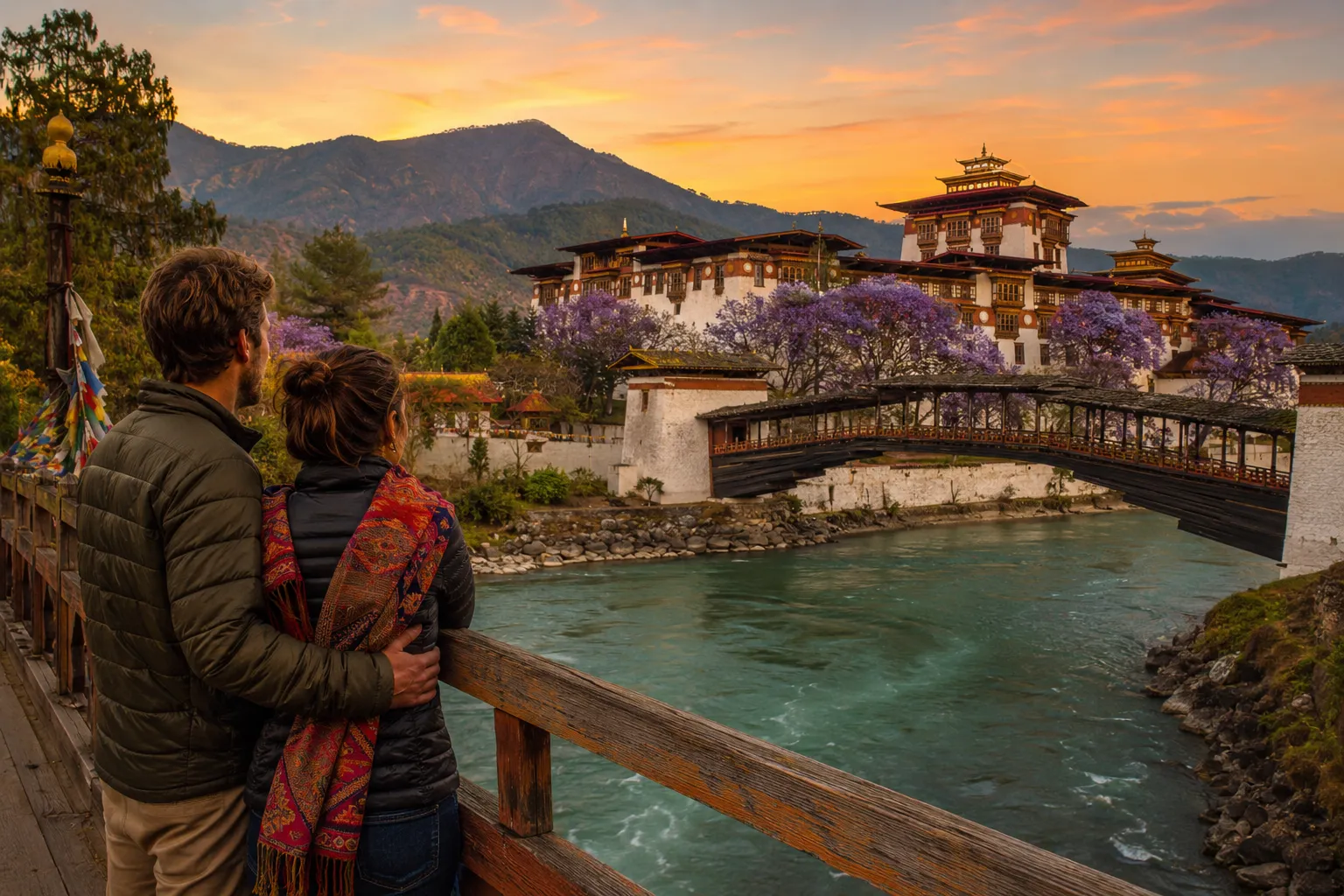
The most beautiful dzong in Bhutan, built at the confluence of two rivers in 1637. The Punakha Tsechu festival (February–March) features the famous "Divine Madman" masked dances. In spring, jacaranda trees bloom purple along the approach road — one of Bhutan's most stunning sights.
4. Dochula Pass
108 chortens (Buddhist stupas) built on a mountain pass at 3,100m. On clear days (best in winter mornings) you can see seven Himalayan peaks including Gangkhar Puensum, the highest unclimbed mountain in the world. A short drive from Thimphu — included in most 5+ day tours.
5. Paro Valley and Town
The only international airport in Bhutan (known for its dramatic landing approach). Paro town has the best traditional Bhutanese architecture, the National Museum of Bhutan, Rinpung Dzong, and Kyichu Lhakhang — one of the oldest temples in the country, built in 659 AD.
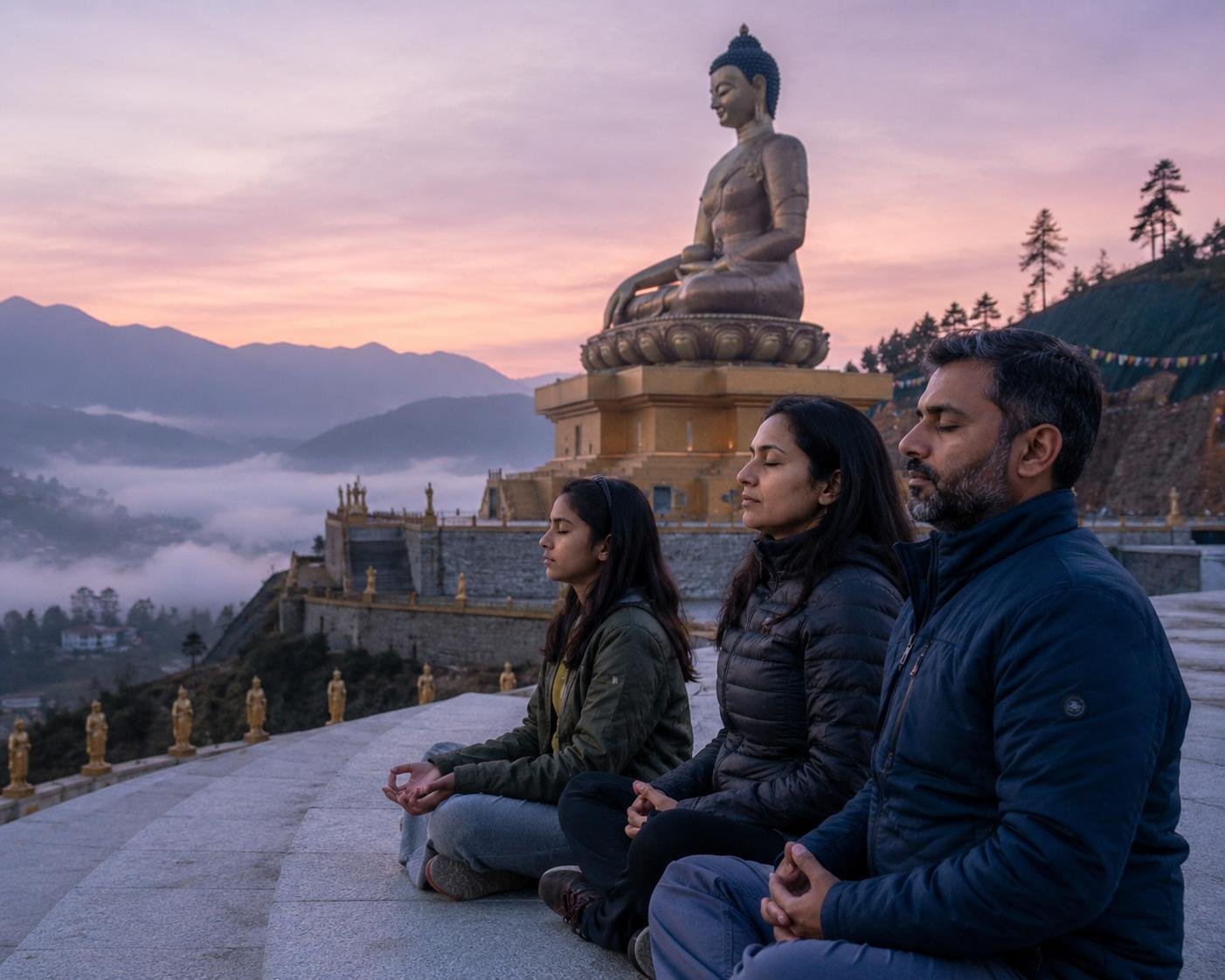
Thimphu's Buddha Dordenma at dawn — the tallest Buddha statue in the world
Bhutan Travel Guide: 7-Day Itinerary from Jaigaon
This is the actual itinerary we run for most of our 7-day clients. Timings are real — not the optimistic ones you see in brochures.
Day 1: Jaigaon → Phuentsholing → Thimphu
Meet our team in Jaigaon at 8:30am. Walk across the border to Phuentsholing Immigration, collect your permit (allow 1.5 hours). Drive to Thimphu via the mountain highway (5–6 hours, stunning views). Check in, evening walk at Thimphu Clock Tower Square. Dinner: Bhutanese set meal at your hotel.
Day 2: Thimphu
Buddha Dordenma statue (best at sunrise), Tashichho Dzong, National Folk Heritage Museum, weekend market (if Saturday/Sunday), Changangkha Lhakhang (stunning sunset views over Thimphu valley).
Day 3: Thimphu → Punakha via Dochula Pass
Early morning drive to Dochula Pass — arrive by 8am for clear mountain views. 108 chortens photo stop. Continue to Punakha. Visit Punakha Dzong and Chimi Lhakhang (Fertility Temple — a unique and fun cultural experience).
Day 4: Punakha → Paro
Morning suspension bridge walk at Punakha. Drive to Paro (3 hours). Afternoon: Paro Rinpung Dzong, National Museum of Bhutan, Paro town market walk.
Day 5: Tiger's Nest Hike
The main event. Start the hike by 7:30am. Pack water and snacks. Horse rides available halfway up for those who need them. Allow the full day — lunch at the viewpoint café. Return to Paro hotel by 4pm. Rest and celebrate.
Day 6: Haa Valley (Optional) or Kyichu Lhakhang
Haa Valley is a restricted area (permit required — we arrange this). It is one of Bhutan's most remote and beautiful valleys — very few tourists. Alternative: visit Kyichu Lhakhang and Drugyal Dzong ruins. Evening farewell dinner in Paro.
Day 7: Paro → Phuentsholing → Jaigaon
Early morning departure. Drive back to Phuentsholing (6–7 hours). Return to Jaigaon by evening. Optional: overnight in Phuentsholing to break the journey.
What to Eat in Bhutan
Bhutanese food is spicy. Very spicy. The national dish, Ema Datshi, is chillies cooked with yak cheese — it looks like a side dish but it is the main event. Other staples:
- Red rice — nutty, slightly chewy, grown in the Paro Valley
- Phaksha Paa — pork with dried red chillies, deeply aromatic
- Momos — Bhutanese dumplings, filled with pork or vegetables, served with fiery chilli sauce
- Butter tea (Suja) — made with yak butter and salt, an acquired taste that gives you energy at altitude
- Ara — traditional Bhutanese rice spirit, often offered during festivals
Almost every restaurant serves Indian food too — dal, rice, and roti are standard. If you cannot handle extreme spice, ask your guide to request "less chilli" (phentse) when ordering.
8 Practical Tips from Our Bhutan Travel Guide
- Bring extra passport-size photos — the permit office may ask for them. Two is enough.
- Indian Rupees are accepted everywhere in Bhutan at 1:1 parity with Bhutanese Ngultrum. You do not need to exchange currency.
- SIM cards — Indian SIMs (BSNL and Airtel) often work in Bhutan with roaming. Local Bhutan SIM (TashiCell or B-Mobile) costs around Rs 200 with 2GB data.
- ATMs — there are ATMs in Thimphu and Paro. Carry cash for smaller towns. Most hotels take cards but small restaurants do not.
- Dress respectfully near monasteries and dzongs — covered shoulders and knees are required to enter most religious sites. We advise all clients to carry a shawl.
- Altitude acclimatisation — Thimphu is at 2,300m, Dochula at 3,100m, Tiger's Nest at 3,120m. If you have a heart condition or respiratory issues, inform us before booking so we can plan a more gentle itinerary.
- Photography rules — photography inside most dzongs and monasteries is not permitted or requires a small fee. Always ask your guide first.
- Plastic bags are banned in Bhutan — carry a reusable bag. Cigarettes are also technically illegal (you can bring a personal supply but cannot buy them in shops).
How to Book Your Bhutan Tour from Jaigaon
We are WanderWaysHolidays, based in Vivekananda Pally, Jaigaon — 200 metres from the Phuentsholing border gate. We have been running Bhutan tour packages since 2018. Our team handles every permit, every transport booking, and every hotel check-in so you arrive relaxed and leave wanting to come back.
To book, simply send us your travel dates, group size, and preferred budget — we will send you a custom itinerary within 24 hours. No deposit required to get a quote. Learn more about Bhutan's philosophy of Gross National Happiness that makes this country unlike any other.
Local Advantage: Most Bhutan tour operators are based in Delhi, Mumbai, or Kolkata — they send you to Jaigaon by train and pick you up here. We live here. We know every road condition, every permit officer, and every good restaurant in Phuentsholing. That matters when things go wrong.