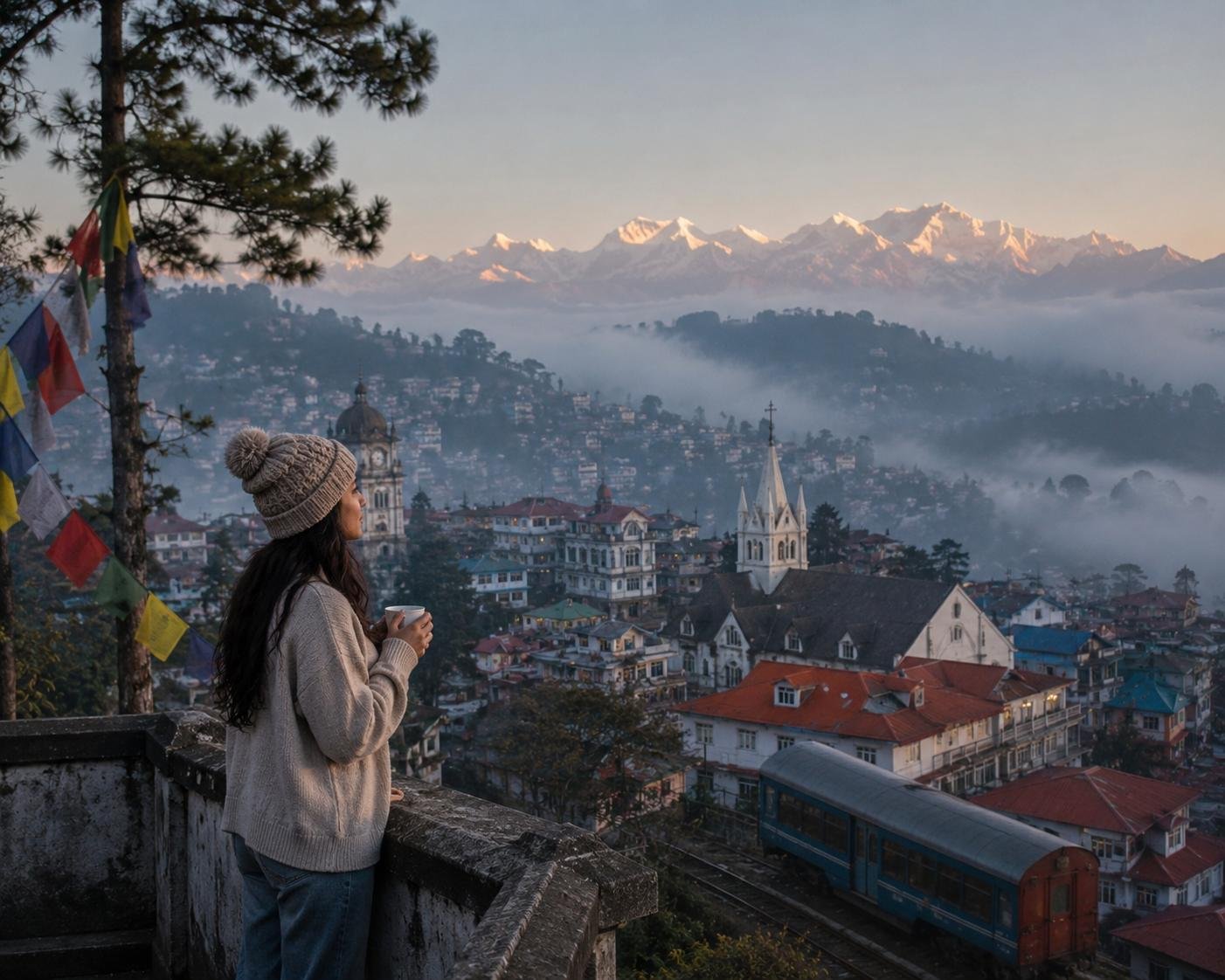
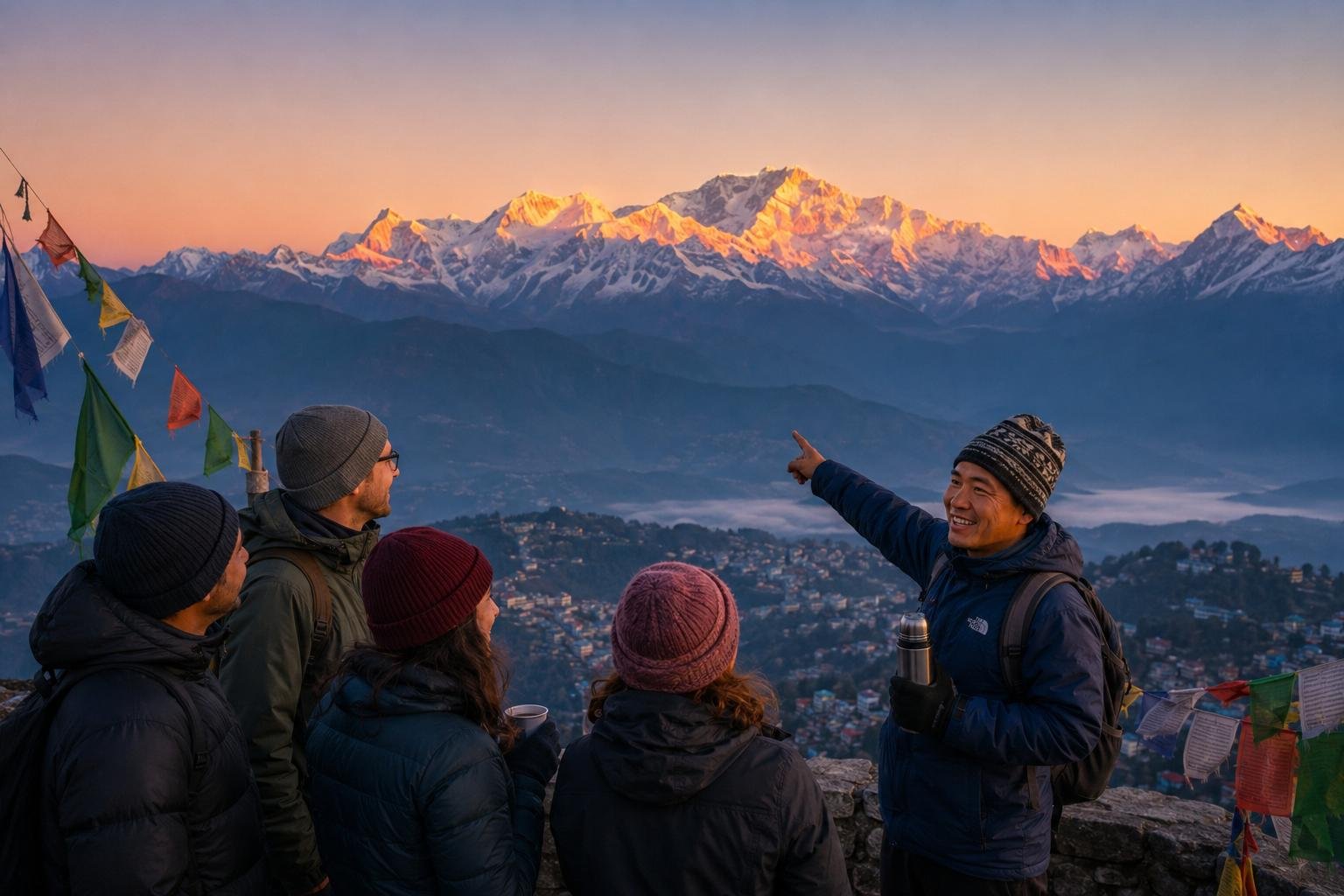
The hidden gems in Darjeeling that nobody tells you about are the reason this hill station has kept bringing people back for 150 years. Most tourists land, queue for the Toy Train, fight for space at Tiger Hill, and leave thinking they have "done" Darjeeling. They have not even started. I grew up in these hills. Here are the seven places that make locals roll their eyes when they see tourist queues at the usual spots.
Darjeeling sits at 2,050 metres in the Darjeeling Himalayan Hill district of West Bengal. It has been a hill station since the British East India Company established it in 1835. What most tourists do not know is that the town is layered — the mall and the main road are the surface, and the real Darjeeling lives in the lanes below and above it.
Why These Hidden Gems in Darjeeling Matter More Than Tiger Hill
Tiger Hill is genuinely spectacular — on a clear morning, Kanchenjunga turns gold and the curve of the Himalayan range is one of the most beautiful sights in the world. But it is also crowded, cold, and requires a 3am wake-up call. The hidden gems in Darjeeling listed below can be visited at a reasonable hour, rarely have crowds, and in many cases give you experiences Tiger Hill simply cannot.
They are also almost all free or very low cost. Darjeeling's tourist infrastructure pushes you towards paid viewpoints and packaged experiences. This guide pulls you off that track.
Hidden Gem #1: Batasia Loop at Sunrise — Not Just a Photo Stop
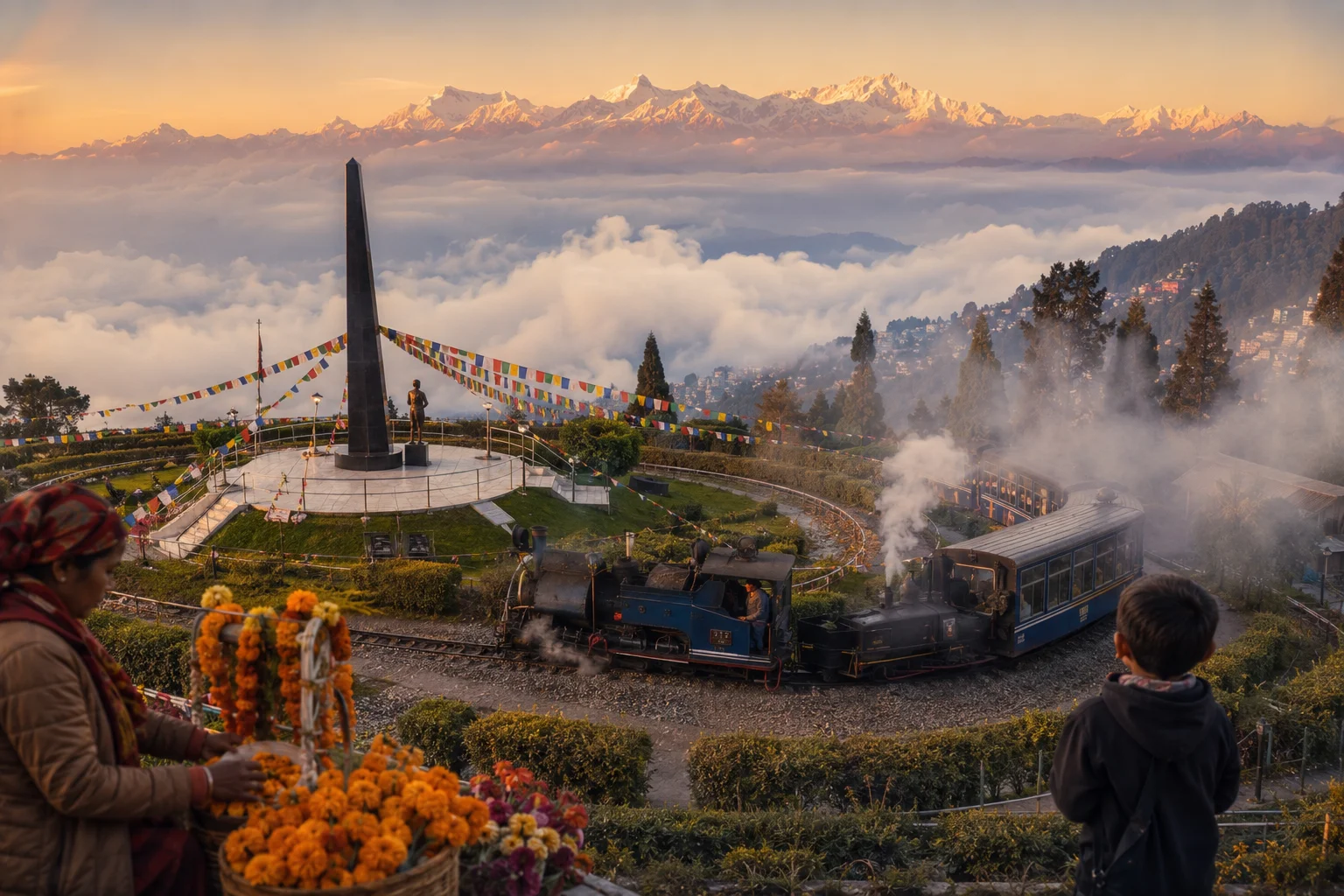
Batasia Loop at sunrise — arrive before 6am and you will have it to yourself
Batasia Loop is listed in every guidebook as a photo stop on the Toy Train route. What the guidebooks do not tell you: if you arrive before 6am, you will be completely alone. The loop is a spiral railway built to allow the narrow-gauge Darjeeling Himalayan Railway (a UNESCO World Heritage Site) to descend steeply without losing control. Standing inside the loop at sunrise, with the Toy Train passing once and Kanchenjunga glowing in the distance, is one of the most peaceful experiences in the Himalayan foothills.
The War Memorial at the centre of the loop is worth visiting thoughtfully — it remembers Gorkha soldiers from Darjeeling who fought in India's wars. Most tourists ignore it.
Timing: Arrive by 5:45am. The Toy Train passes at approximately 6:15am on most mornings. Entry: Rs 10. Bring a thermos of tea.
Hidden Gem #2: Happy Valley Tea Estate Walk
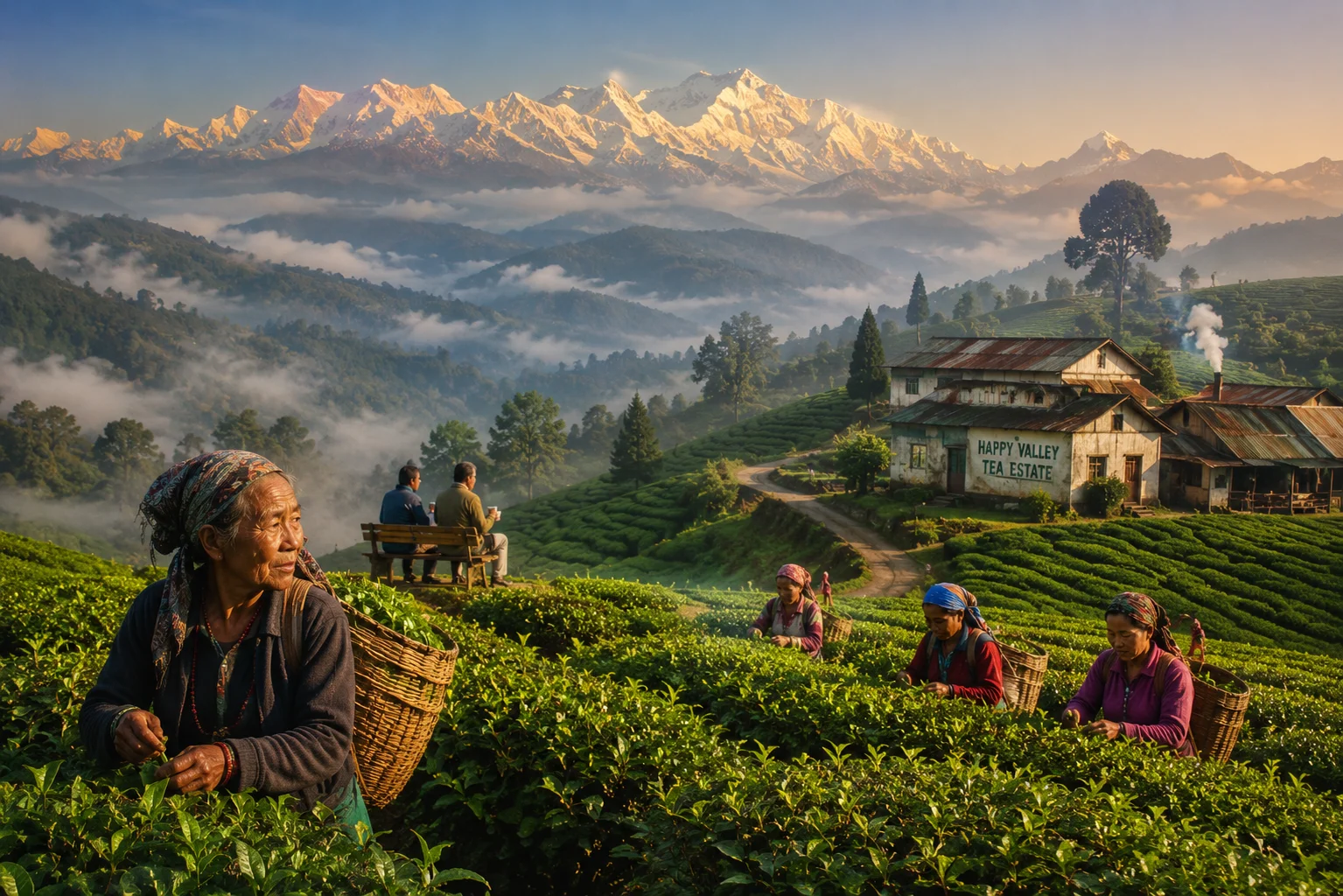
Happy Valley Tea Estate — one of the oldest tea gardens in Darjeeling, established 1854
Most Darjeeling tourists buy tea but never walk through a tea garden. Happy Valley Tea Estate, established in 1854, is 30 minutes' walk from Mall Road and almost never crowded. Walk into the estate on a Tuesday or Wednesday morning (avoid weekends) and you will find yourself in rows of tea bushes at 2,000 metres, with the sound of birds and nothing else.
The factory tour (Rs 50–100) shows the full process — withering, rolling, oxidation, and grading. Ask specifically to see the hand-rolling of first-flush leaves. The estate produces some of the most expensive tea in the world — first flush Darjeeling can sell for Rs 50,000 per kilogram at auction. Buying directly from the estate is significantly cheaper than buying in tourist shops.
Hidden Gem #3: Japanese Peace Pagoda — Almost No Tourists
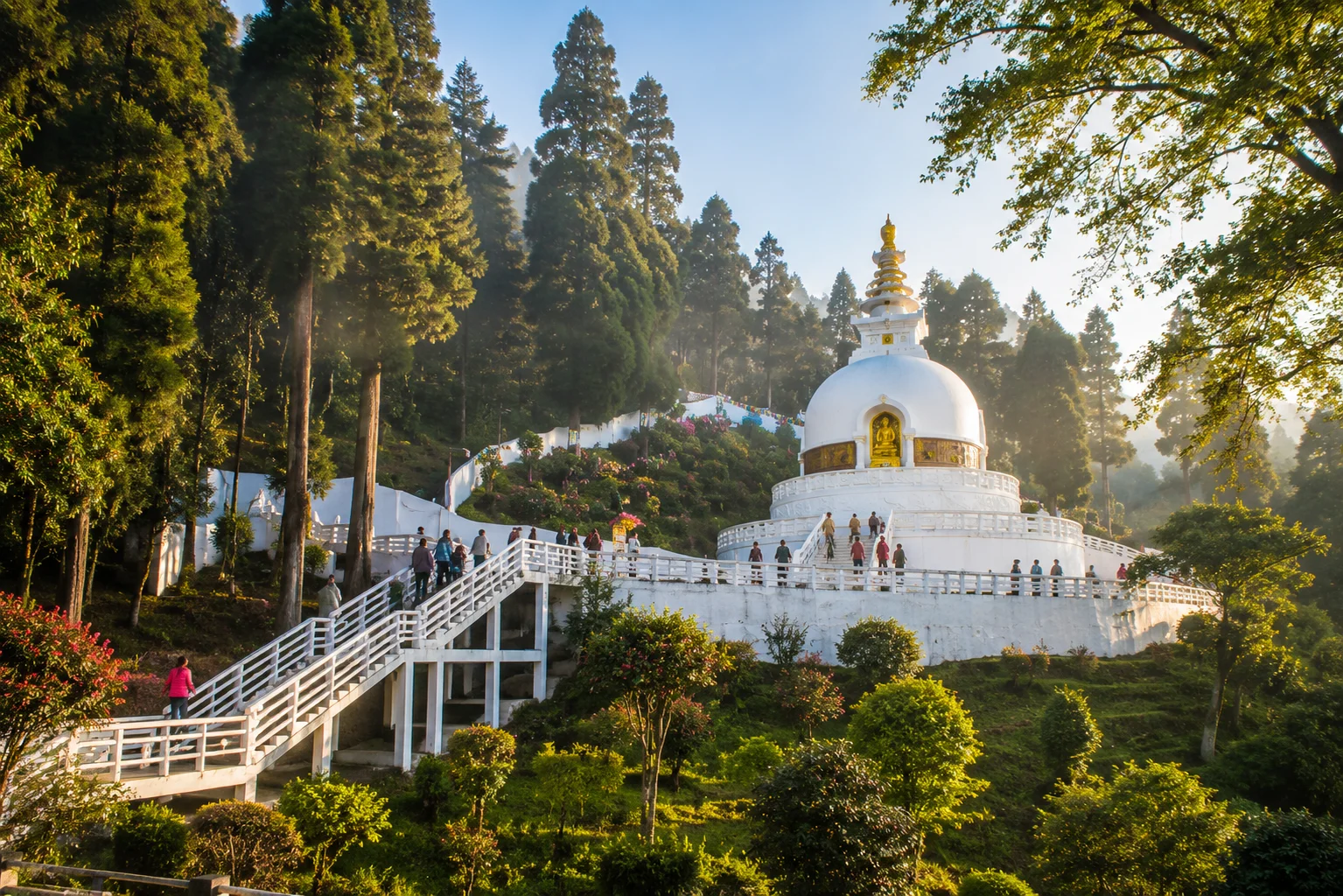
The Japanese Peace Pagoda — 20 minutes from Mall Road, almost always deserted
The Darjeeling Peace Pagoda (also called Shanti Stupa) was built by the Japanese Buddhist Nipponzan-Myohoji order in 1992. It sits on a hill just 20 minutes' walk from Mall Road but most tourists have never heard of it. The white pagoda overlooks the entire Darjeeling valley, with unobstructed views of Kanchenjunga on clear mornings. A Japanese monk lives in the small monastery next to it.
The walk to the pagoda goes through a quiet residential lane that shows you the real Darjeeling — washing lines, small shops, children walking to school. This is one of the hidden gems in Darjeeling that local residents actually use for their own morning walks.
Hidden Gem #4: Ghum Monastery at Dawn
Ghum (also spelled Ghoom) Monastery, formally called Yiga Choeling Gompa, is the oldest Tibetan Buddhist monastery in the Darjeeling area, built in 1850. Most tourists visit it as a mid-morning stop after Tiger Hill. If you visit at 4:30–5:30am, before the morning puja (prayer ceremony) begins, you enter a completely different experience.
The monastery houses a 5-metre-tall maitreya (future Buddha) statue, surrounded by ancient thangka paintings and butter lamps. At dawn, the only light is from those lamps and the first grey light through the windows. The monks chanting puja in the cold dawn air is one of the most powerful experiences available in the eastern Himalayas. No queues. No tourist groups. Just you, the monks, and the butter lamps.
Note: Dress respectfully — covered shoulders and knees. Shoes off at the entrance. Photography during the puja is generally not permitted — ask a monk first. Small donation (Rs 50–100) is appreciated.
Hidden Gem #5: Padmaja Naidu Himalayan Zoological Park
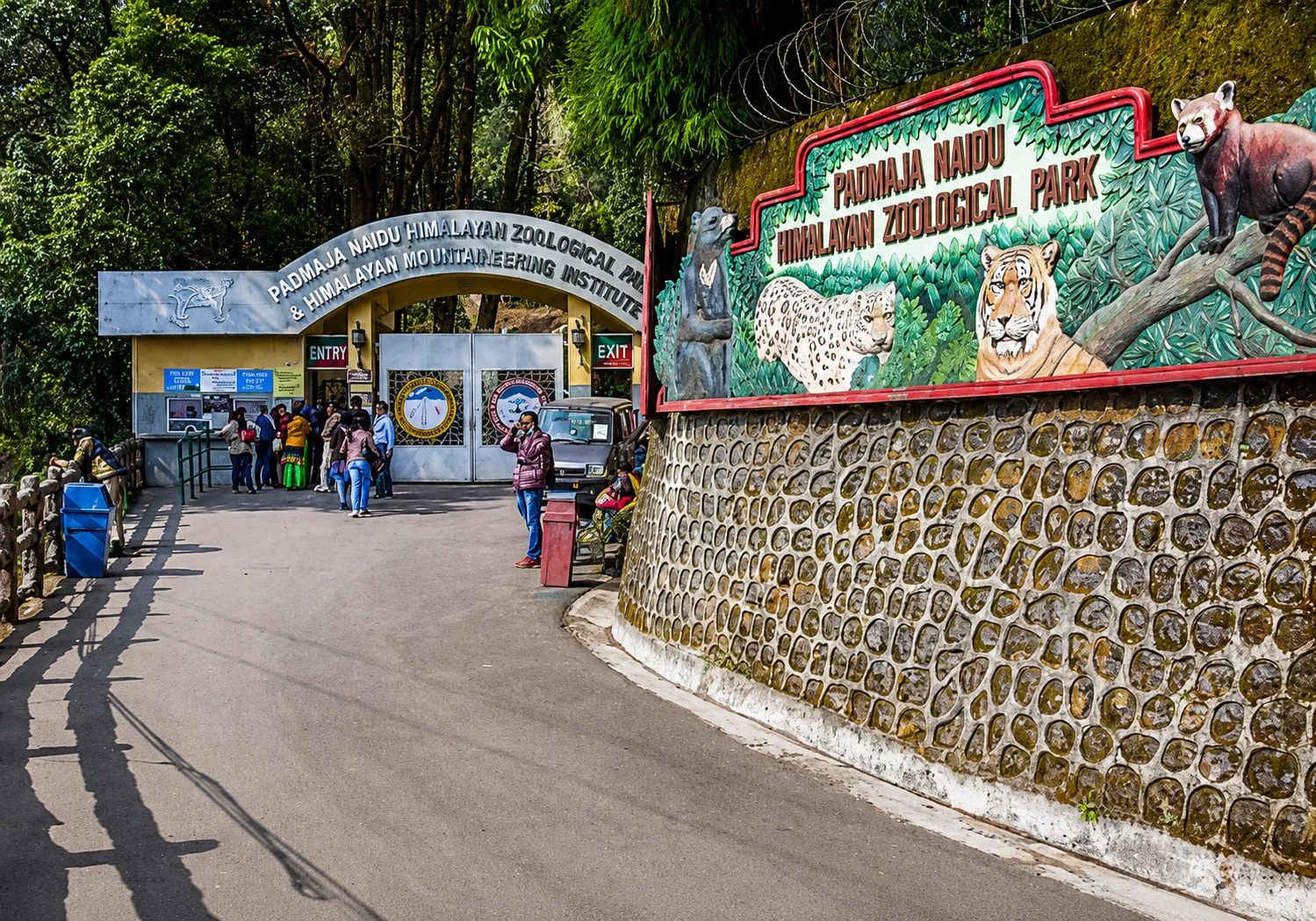
Padmaja Naidu Himalayan Zoological Park — home to red pandas, snow leopards and Siberian tigers
This is not your average zoo. The Padmaja Naidu Himalayan Zoological Park is one of the most successful high-altitude conservation centres in Asia, built at 2,134 metres specifically for animals that live in the eastern Himalayan ecosystem. It houses the largest captive population of red pandas in the world, along with snow leopards, Siberian tigers, Himalayan wolves, and Tibetan wolves.
The zoo is genuinely well-run and beautiful — animals in large enclosures that resemble their natural habitat. The red panda enclosure is particularly excellent. On a clear morning, you can watch red pandas climbing in the trees with Kanchenjunga in the background behind them. This is one of the hidden gems in Darjeeling that locals visit with school children but tourists somehow always miss.
Combined ticket with the Himalayan Mountaineering Institute next door: Rs 100 (Indian adults). The mountaineering museum has genuine equipment from early Everest expeditions, including Tenzing Norgay's gear.
Hidden Gem #6: Rock Garden and Ganga Maya Park
Seven kilometres from Darjeeling town, Rock Garden is built along a stream cascading down the hillside through natural boulders. It is maintained by the local municipality and is genuinely beautiful in spring — rhododendrons, orchids, and flowering trees line the stream path. Ganga Maya Park nearby is an artificial lake surrounded by gardens that is even less visited.
The main reason tourists miss both: they are a short but steep walk or a 20-minute drive. Most tourist packages do not include them because they cannot be rushed — you need an hour minimum to enjoy them. Locals bring picnics here on Sunday mornings. Best visited in March–April when the flowers are out.
Hidden Gem #7: Chowrasta on a Weekday Morning
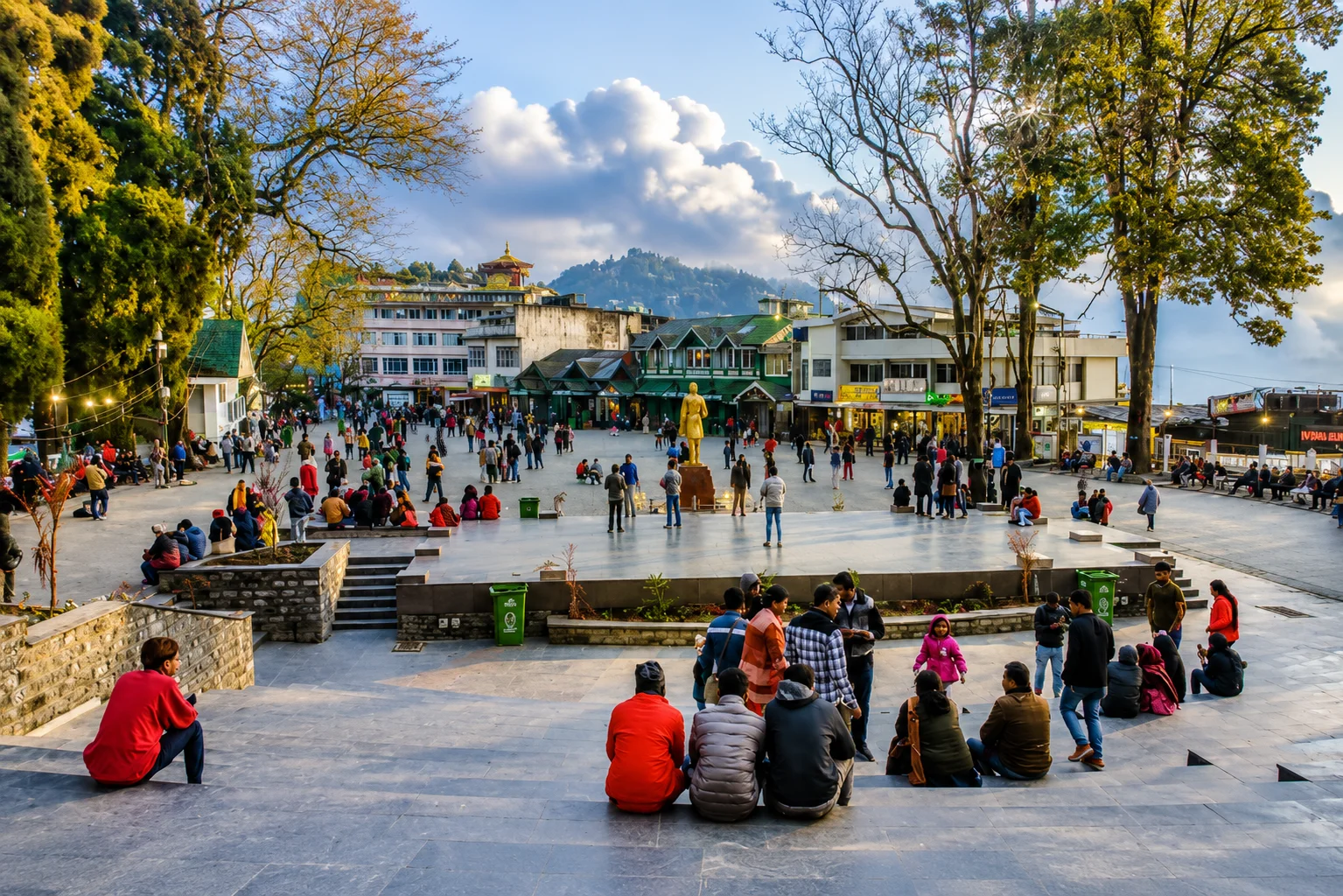
Chowrasta at 7am on a weekday — the real Darjeeling before the tourists arrive
Chowrasta, the central pedestrian square of Darjeeling, is always mentioned in guides as a place to shop and people-watch. What they do not tell you: between 6:30am and 8:00am on weekdays, it is almost deserted except for locals doing their morning walk. The colonial-era Oxford Book & Stationery Company (established 1909, one of the oldest bookshops in India) opens at 9am but the square itself is magical in the early morning light.
Horse rides are also available from Chowrasta — a genuine Darjeeling tradition, not a tourist gimmick. On a clear morning, the view from the northern end of Chowrasta across the valley to Kanchenjunga is unimpeded. Bring a good camera and arrive early. This is one of the hidden gems in Darjeeling that photographs beautifully precisely because there are no crowds in the frame.
How to Visit These Hidden Gems in Darjeeling
Getting to Darjeeling: From Siliguri or NJP, shared jeeps run throughout the day (Rs 250–300, 3–4 hours). Private taxis cost Rs 1,500–2,500. The West Bengal Tourism also runs an AC coach service from Siliguri some mornings.
Getting around Darjeeling: The town is best explored on foot. Distances between most hidden gems are short. For Rock Garden (7km away), hire a local jeep for Rs 800–1,200 round trip including waiting time.
Best timing: Build your day around early mornings (5:30am–9am for the best experiences) and late afternoons (4pm–6pm for golden light). Midday is when Darjeeling gets its tourist crowds and when cloud cover tends to roll in.
Book a Darjeeling Tour with Local Guides
Our guides were born in these hills. They know which lane leads to Chowrasta at 7am, which tea estate manager will give you a proper tour instead of a rushed 10-minute walkthrough, and which morning has the best chance of Kanchenjunga being clear.
Contact us to plan your Darjeeling itinerary — or see our Darjeeling and Himalayan tour packages. We combine Darjeeling with Bhutan, Sikkim, or Kalimpong for itineraries that make proper use of the time you have.